Discover how creators grow and monetise on Substack in 2026, and why it's where real brand opinions are being formed. Don't be left out.
There is a conversation happening about your brand right now. It’s not happening on Instagram or on TikTok, it’s happening in someone's SubStack inbox.
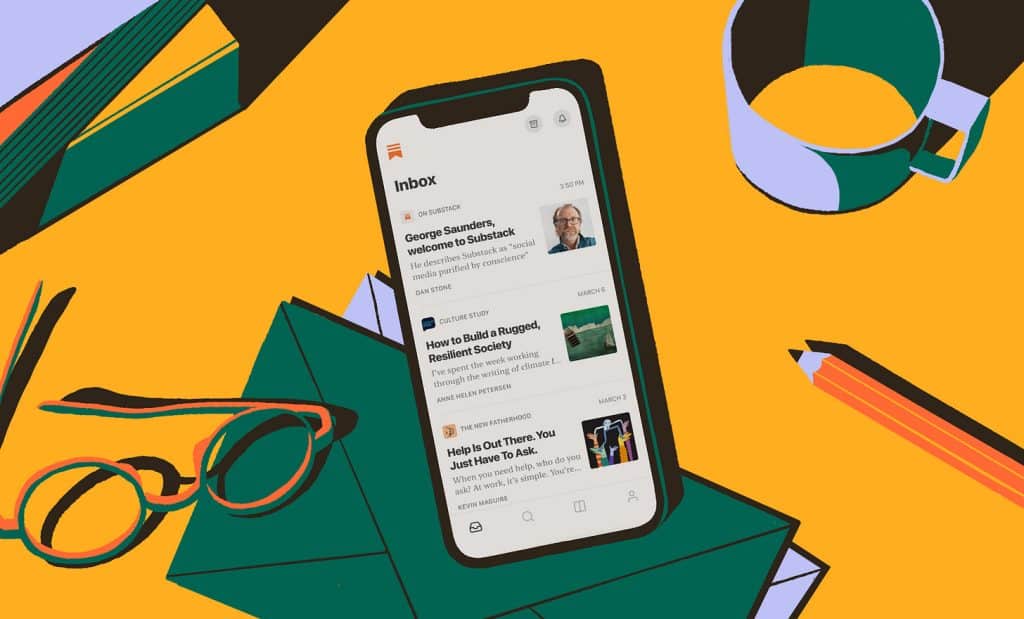
Substack has quietly become the platform where opinions form, audiences gather, and trust is built or broken, away from the noise of social feeds and outside the reach of brand-controlled messaging. Creators are publishing long-form analysis of products, culture, and industry trends to engaged subscribers who actively chose to be there. Real recommendations. Honest takes. Unfiltered opinions landing directly in inboxes every morning.
Image Source: Substack
For brands still treating Substack as a niche newsletter tool for journalists, 2026 is the year the gap between early movers and everyone else starts to show.
The following guide covers insights for creators; how to grow, monetise, and stand out on Substack. But the commercial opportunity for brands and marketers is woven throughout, because the two things are now inseparable. Understanding how creators build on Substack is the first step to understanding where brand strategy needs to go next.
What Is Substack and Why It Matters in 2026
Substack launched in 2017 as a platform for paid email newsletters. The premise was simple: writers could build a direct relationship with their audience, charge for access, and own the result. No algorithm. No intermediary. No risk of being de-platformed overnight.
For content creators, Substack represents something that has become increasingly rare: ownership. Your list is yours, your revenue is yours, and your relationship with your audience does not depend on a platform deciding whether today is your day in the algorithm.
For brands and agencies, it represents something else entirely. A direct line into the spaces where educated, engaged audiences are forming their most considered opinions. This is where building for business starts to make real commercial sense.
How Substack Is Shaping the Creator Economy
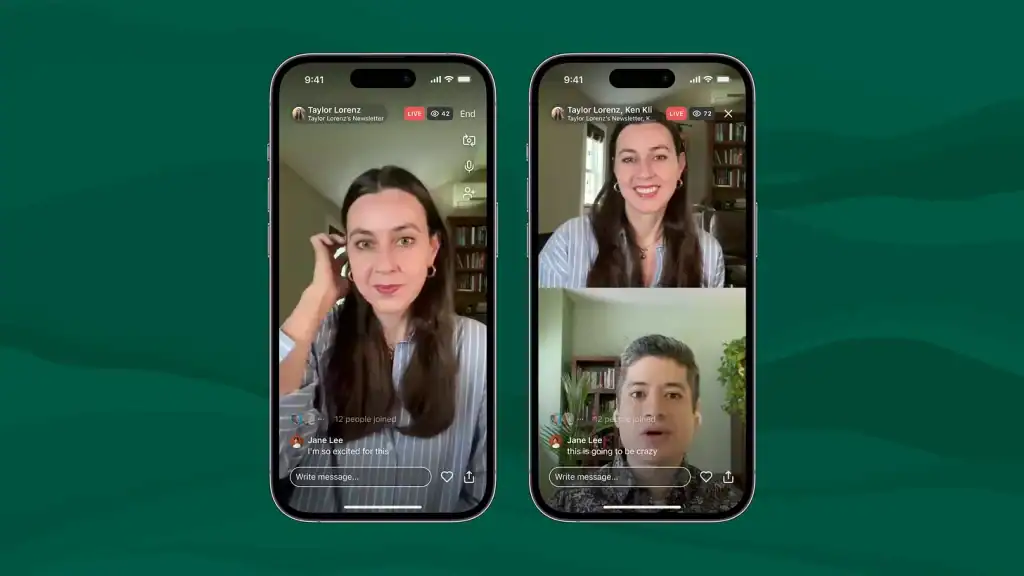
Substack is no longer just a newsletter platform. It now supports written posts, audio, video, live sessions, community discussion threads, and a short-form notes feature that functions similarly to a social feed. The platform recently launched a TV app and expanded its short-form video capabilities, moving further into territory occupied by YouTube and podcast platforms.
Image Source: Substack
The result is a creator-owned media model. One publication that can house every format, every revenue stream, and every audience touchpoint, without surrendering control to a third-party feed. For creators building long-term media businesses, that breadth is the point.
Why Substack Is Becoming the Creator Platform of Choice
The shift toward Substack reflects a broader move away from platform dependency. After years of algorithm changes, reach suppression, and the commoditisation of social content, creators are increasingly prioritising channels they own over channels (and audiences) they rent.
Substack offers direct audience ownership through email. No intermediary can reduce your reach once someone subscribes. Revenue comes from subscriptions rather than ad rates or brand deal dependency. Long-form content thrives here in a way it cannot on platforms optimised for scroll speed. And the freedom from social algorithms means consistency and quality compound over time, rather than competing for attention in a feed where yesterday's post is already irrelevant.
Growth on Substack is earned, not hacked. The platform's internal recommendation engine is one route in, but organic discovery has become more competitive as the creator base expands. The publications seeing consistent subscriber growth in 2026 are the ones treating Substack as part of a broader content ecosystem rather than a standalone destination.
Collaboration accelerates growth in ways that solo publishing cannot. Guest posts, cross-promotion agreements, and co-authored projects introduce each creator's publication to the other's audience. Substack's native recommendation feature formalises this to some extent, but the most effective collaborations are still handled directly between creators with genuine audience alignment.
Consistency is the baseline. Substack rewards publishing cadence, not because the algorithm punishes infrequency, but because subscribers who see your name in their inbox regularly are more likely to remain subscribers. Irregular publishing erodes the habit that keeps readers coming back.
How Creators Monetise on Substack
The most straightforward monetisation model on Substack is the paid subscription tier. Free content builds the audience; paid content converts the most engaged segment into recurring revenue. Substack takes a 10% platform fee on paid subscriptions, making it one of the more creator-favourable arrangements in digital publishing.
Beyond subscriptions, Substack newsletters are increasingly a sponsorship vehicle. Substack launched a formal sponsorship beta programme in late 2025, pairing creators with brand partners in a model that keeps editorial control entirely with the writer. It is opt-in, creator-led, and deliberately positioned away from programmatic advertising. For creators, it adds a direct revenue stream without requiring off-platform deal-making. For brands, it represents access to high-intent audiences through editorially coherent placements, something performance channels simply cannot replicate.
The commercial case is already proving itself. When skincare brand Medik8 partnered with Emily Sundberg's Feed Me Substack, it recorded a 204% return on ad spend, a result driven entirely by the trust Sundberg had built with her audience, not by targeting mechanics or paid amplification.
Digital products, paid events, live sessions, and tiered membership models round out the toolkit. The creators building sustainable Substack businesses are rarely relying on a single revenue stream. The ones treating paid access more like a membership, with exclusive content, community access, and direct engagement, are consistently outperforming those who offer subscriptions as a paywall on more of the same.
How to Stand Out on Substack
The platform is growing fast and the competition for inbox space is real. Standing out in 2026 requires more than good writing. It requires a clearly defined point of view, a consistent voice, and a reason for readers to pay attention beyond the content itself.
One metric that helps explain why: Substack newsletters average open rates of between 40% and 60%, significantly higher than the 21.5% industry average for standard email marketing. Readers on Substack are not passively receiving content. They are actively choosing to engage with it. That attention is the asset.
Niche specificity is the starting point. The publications that break through are not trying to cover everything. They own a particular corner of culture, industry, or perspective and go deep. A broad remit makes positioning harder and differentiation nearly impossible.
Voice matters more than production value. Substack readers chose long-form, they chose to subscribe, and they chose their inbox as the place they receive this content. They are not scrolling past. They are sitting with it. That context demands substance and personality, not polish for its own sake.
Consistent value builds the trust that converts free subscribers to paid. That means showing up reliably, treating subscribers as a community rather than an audience, and creating space for real engagement, comments, replies, live sessions, rather than broadcasting into a void.
The publications compounding fastest on Substack are not necessarily the biggest names. They are the ones with the tightest audience fit, the clearest editorial identity, and the deepest subscriber relationships.
What This Means for Brands
Substack is not a performance channel. But framing it purely through a performance lens misses the point entirely.
Brands like Madewell, Rare Beauty, and The RealReal have launched their own Substack newsletters, treating the platform as an editorial channel, a space to build brand equity through genuine content rather than promotional messaging. Dating app Hinge built a Substack literary series combining real couple stories with a physical book and book club partnerships. Resale platform Vestiaire Collective sponsors posts with creators in fashion and lifestyle. American Eagle launched its own publication, Off The Cuff, co-authored with creator Casey Lewis, moving the brand beyond social feeds into long-form editorial storytelling.
These are not experiments. They are early signals of a platform shift that is already underway.
The commercial case is straightforward. Substack audiences are engaged, self-selected, and spending active time with content. They are not scrolling. They are reading. A brand placement in the right creator's newsletter reaches a different version of that audience than a paid social impression does. It lands with context, with trust already in place, and with the creator's editorial credibility behind it.
The more sophisticated opportunity is creator partnership, identifying the Substack voices that already have your target audience's trust and building long-form, editorial-first activations that match the platform's expectations. This is not display advertising reskinned. It is influence built on depth.
Influence Marketing Agencies like Disrupt sit at the intersection of those decisions, understanding which creators have built real communities on Substack, how brand partnerships work within the platform's editorial-first framework, and how to build activations that respect that environment rather than disrupt it.
The Future of Substack and How Creators Can Stay Ahead
Substack's trajectory is clear. The platform is investing in multimedia, short-form video, live sessions, podcasts, and a growing TV app, making it viable as a full media platform rather than a single-format newsletter tool. Discovery is improving, with smarter internal recommendations and better cross-platform sharing tools. Monetisation infrastructure is expanding, with the formal sponsorship programme being the clearest signal that Substack is ready to position itself as a proper creator economy player.
For creators, the edge goes to those who treat multimedia as native rather than supplementary. Publications that pair written depth with video and audio are building wider on-platform reach and deeper subscriber loyalty simultaneously.
For brands, the window to engage Substack ahead of mainstream adoption is now. Substack reached unicorn status following a £75 million Series C in July 2025, its valuation reflecting the platform's trajectory rather than its current scale. Where investment goes, audiences and the advertising infrastructure to reach them follow.
The creator economy has a new centre of gravity. Brands that understand that shift early will have the relationships, the presence, and the credibility to compete when it becomes obvious to everyone else.
Disrupt is a London-based influencer and creator marketing agency specialising in genuine influence, measurable growth, and creator-first campaigns. Working with brands including Netflix, Vinted, Wizz Air, The FA, and Huel. Part of Tomorrow Group alongside Found, Braidr, and Seed Studio.
The 2026 World Cup is sport’s biggest marketing moment. Learn how brands can win without sponsorship using creator-led, social-first strategies.
07 May 2026
8 MIN READ
YOU'VE GOT QUESTIONS.
WE'VE GOT THE ANSWERS.
How is Substack ROI measured?
From an agency perspective, we shift the focus from vanity metrics to High-Intent Attribution. Because Substack is email-based, we prioritise open rates (often 40-60%), click-through rates (CTR), and conversion rates via unique promo codes or UTM-tracked links. We also track Earned Media Value (EMV) to estimate the value of the creator’s deep audience trust, which often yields higher long-term Customer Lifetime Value (CLV) than fleeting social impressions.
Should brands start their own Substack or strictly partner with existing creators?
It’s rarely an either-or. We typically recommend a "Partner First, Build Second" strategy. Partnering with established creators allows brands to borrow existing trust and reach. However, brands like Rare Beauty successfully use their own Substacks for founder-led storytelling and insider access, treating it as a "loyalty hub" rather than a sales-heavy marketing channel.
How does Substack’s new "Native Advertising" pilot change our strategy?
The 2026 native ad pilot simplifies the sponsorship process, making it easier for brands to scale across multiple newsletters without manual one-on-one negotiations for every single post. However, the most successful brands still prioritise editorial-style integrations that feel like a personal recommendation rather than a standard banner ad.
What makes a Substack creator "brand-safe" compared to TikTok or Instagram?
Substack creators are often subject-matter experts or specialized voices in a niche. This depth inherently reduces the risk of "accidental" viral controversy common on algorithmic platforms. We vet for publishing consistency, community engagement quality (comments and replies), and alignment with brand values. Because readers choose to subscribe, the audience is naturally more receptive and less likely to react negatively to a well-aligned partnership.
Is Substack only for B2B or high-ticket consumer brands?
While it excels in B2B and high-consideration sectors like finance, wellness, and tech, we are seeing a massive surge in lifestyle, fashion, and food. Fashion newsletters like Magasin have become community hubs for honest recommendations. Any brand that benefits from narrative depth and context can find success on Substack.








 5 MIN READ