

Instagram Just Changed the Rules for Every Brand on the Platform


On the 30th of April 2026, Instagram made its most significant algorithmic changes in years. Accounts that primarily repost content they did not create will no longer be recommended to non-followers. The change extends protections that were already in place for Reels to photos and carousels, meaning the full scope of Instagram's content surfaces are now covered.
If your brand account has relied on curated content, reposted UGC, or recycled posts from other platforms, this update affects you directly.
Here is what changed, what it means, and what to do about it.
What Instagram Actually Changed
Instagram's algorithm has always rewarded content that performs well. What has changed is the eligibility criteria that determines whether your content gets recommended to new audiences in the first place.
Under the new rules, accounts are evaluated on a rolling 30-day basis. If most of what an account posts within that window is content it did not create, Instagram classes it as an aggregator account and removes it from recommendations across Explore, the Feed, and the Discover tab. Existing followers still see your content. But your ability to grow, to reach those people who do not already follow you, is effectively switched off.
Instagram chief, Adam Mosseri announced the change directly on his Instagram account: "If most of what you post to Instagram is someone else's content, your account is no longer going to be recommendable. That means we're no longer going to show your posts to people who don't follow your account proactively."
The update is not a manual penalty applied to specific accounts. It is a structural algorithmic change. It applies automatically, based on the composition of your recent posts.
Keeping up with every Instagram change is a full-time job. Disrupt's Instagram Updates 2026 guidetracks every significant platform shift throughout the year and what it means for brand strategy. Bookmark it.
If you want to talk through what this specific update means for your brand's Instagram strategy, get in touch with the Disrupt team.
What Counts as Original Content, and What Doesn't?
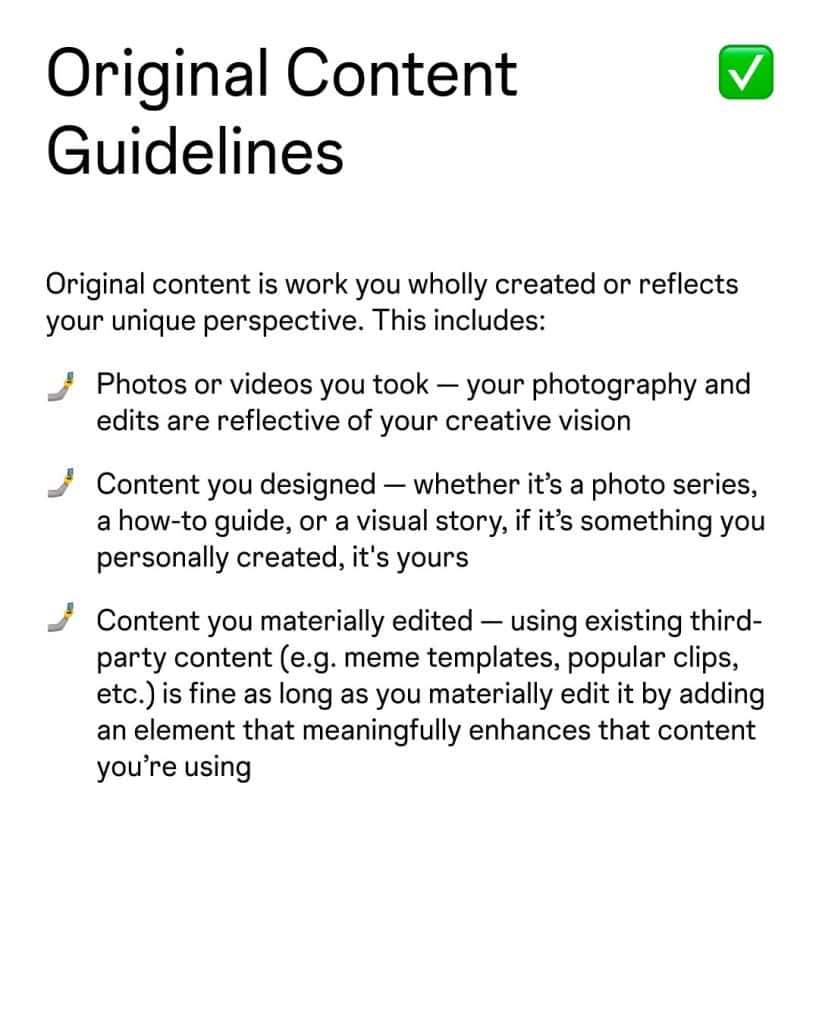
Instagram has been specific about what qualifies. Original content includes:
- Photos you personally took
- Videos you shot yourself
- Graphics and designs you created
- Third-party content that has been materially transformed, meaning genuine commentary, creative edits, educational overlays, humour, voiceover, or green screen reactions that add real value beyond simply restating the source material
- Reposted content from TikTok, YouTube, or other Instagram accounts without meaningful modification
- Screenshot carousels built from twitter threads or other people's posts
- Meme pages that aggregate without adding original perspective
- Content with only a border, watermark, or basic caption added
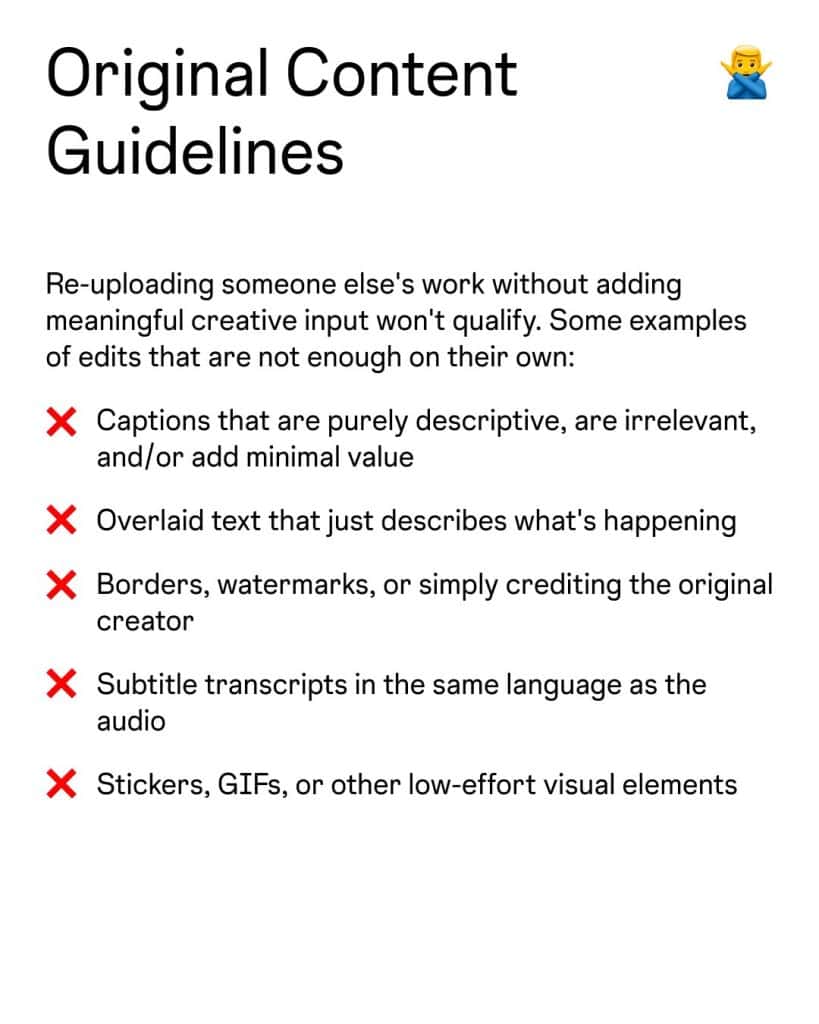
The test Instagram recommends applying is straightforward: does the edit add real value beyond simply restating or referencing the third-party content? If the honest answer is no, it will not be treated as original.
There is also a practical remedy available. Creators and brands that want to share another account's content can use Instagram's Repost button or tag the original creator as a collaborator via the Collab feature. Both options credit the original creator and ensure that reach and engagement flow to the primary source rather than the reposter.
Why Instagram Made This Change
The motivation is not complicated. Instagram's creator economy depends on original creators being willing to invest time, effort, and creative energy in the platform. For years, aggregator accounts have been able to build large followings and generate significant reach from content they did not make, often without crediting the people who did.
That dynamic is commercially and culturally unsustainable. Original creators have been vocal about the frustration of watching their work generate reach for accounts that simply lifted it. Instagram's response is to remove the algorithmic incentive for aggregation entirely.
There is also a quality signal embedded in this change. Reposted content, by definition, is content that has already circulated. Surfacing it repeatedly degrades the discovery experience for users. Instagram's business model depends on keeping people engaged and returning to the platform. Original content does that better than recycled content does.
What This Means for Brand Accounts
For brands, the immediate question is an honest one: what does your Instagram content actually look like over the last 30 days?
Brands that have built their organic strategy around curating content from creators, reposting user-generated content without formal collaboration agreements, or recycling posts from their other channels are now in a structurally weaker position on Instagram. That content will still reach existing followers. But its ability to drive discovery, to build the account, grow the audience, and reach people who do not yet know the brand, has been diminished.
The brands that are well-positioned are the ones that have consistently produced original content. That includes brands running formal creator partnership programmes, where content is created by creators under a clear brief and shared through Collab or with proper permission structures in place.
A few practical steps worth taking now:
Audit your last 30 days. What proportion of your recent posts are content your team or your creators made? What proportion is reposted or curated from elsewhere? Instagram allows you to check your account's recommendation status in Settings under Account Status.
Review your UGC strategy. User-generated content remains valuable, but the way you use it matters. Reposting a customer's photo without a formal collaboration or Collab tag now carries an algorithmic cost. Building a proper UGC programme, with permission structures, creator credit, and Collab integration, is the right long-term approach.
Brief your creators properly. Creator content shared through a Collab post or produced specifically for your brand account counts as original. Creator content you simply repost does not. If your influencer programme involves reposting creator content to your brand channels, the framework needs updating.
Invest in original brand content. This update is Instagram signalling clearly where it intends to send its recommendation traffic. The platform is building a system that rewards brands who make things. That investment, whether in in-house production, creator partnerships, or both, now has a direct algorithmic return.
The Bigger Picture
This change does not exist in isolation. In the same week, Instagram announced it is testing account-level "AI Creator" labels for accounts that regularly produce AI-generated content. Both moves point in the same direction: Instagram is building a platform that formally distinguishes between original human creators and accounts that produce or recycle content without genuine creative investment.
That is good news for brands that have approached Instagram with a creator-first mindset. The algorithmic infrastructure is increasingly aligned with the commercial reality that genuine, original content, made by real people with a real point of view, is what audiences trust, engage with, and act on.
The brands that have been building creator relationships, producing original content, and treating Instagram as a creative channel rather than a distribution pipe are the ones this update rewards.
For brands that have not, the window to change that approach is now.
The opportunity is clear: brands that invest in creator-led marketing now will be best positioned to win attention tomorrow—and Disrupt's Instagram influencer marketing agency can help you get there.

 7 MIN READ
 9 MIN READ
 7 MIN READ