

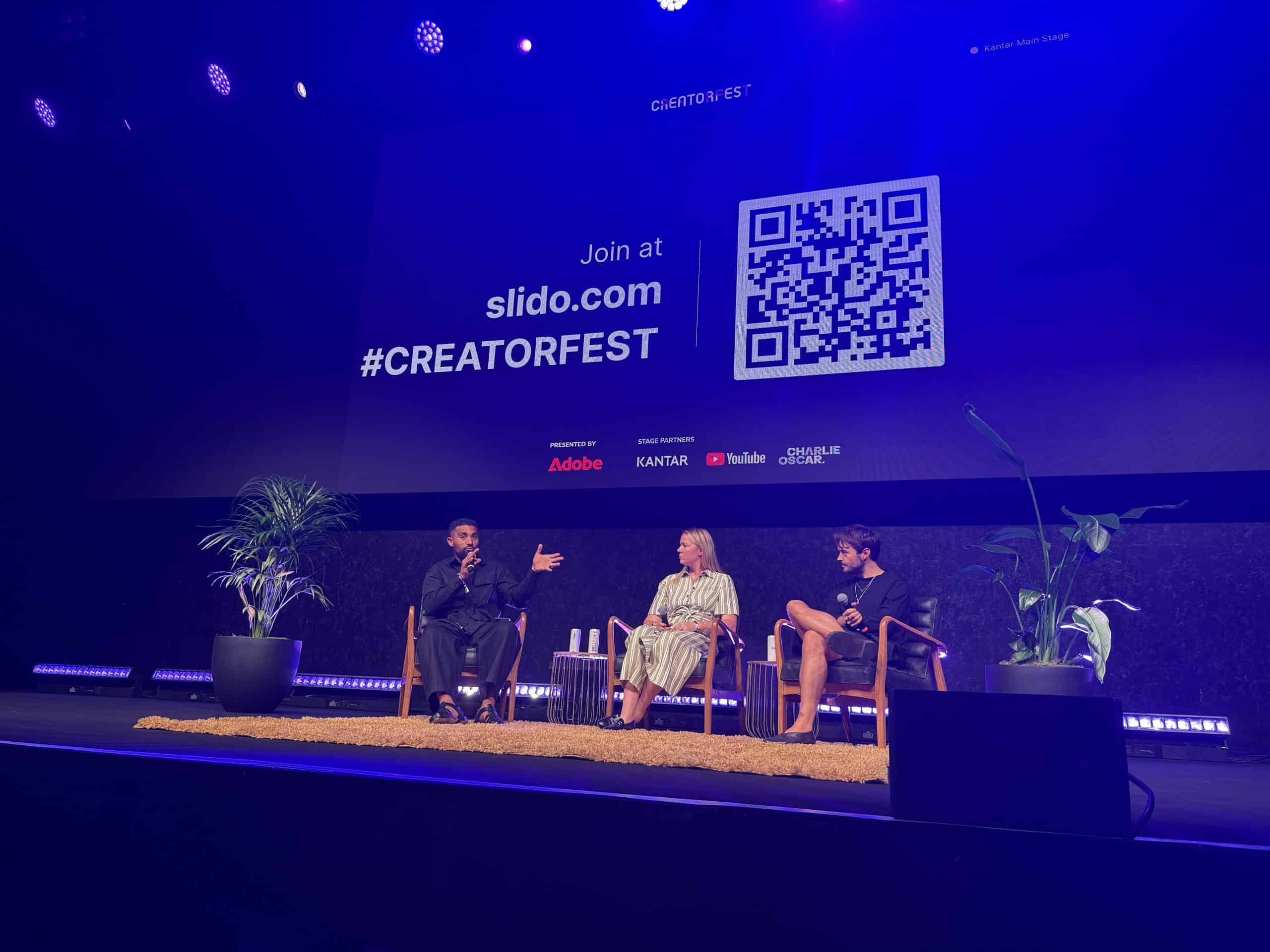
On Stage at CreatorFest 2026: Why Creator-First Strategies Are the New Normal for Scaling Luxury Growth


On Tuesday, Disrupt took to the stage at CreatorFest alongside Elie Barnes, Chief Marketing and Digital Officer at Bremont Watches, and Mathieu Couret, Senior Influencer Marketing Manager at Vinted. The session, Building Brand Legacy in the Creator Era: Lessons From Luxury and Fashion, brought two brand leaders together from opposite ends of the prestige spectrum. The question on the table is one the industry can no longer sidestep. As premium brands lean harder into creator-led strategies, and luxury influencer marketing matures from experiment into serious brand-building channel, how do you scale through people without diluting the thing that made you desirable in the first place?
Your customer's phone is your storefront.
Jay Richards, Chief Provocateur at Disrupt, opened with a provocation. The front door of a premium brand is no longer a boutique, a billboard, or a campaign. It's the person your customer trusts on their phone at 11pm. In high-consideration categories like luxury watches, premium fashion and heritage beauty, that isn't a trend to manage. It's a structural shift to build around.
"A brief to a creator should be like scaffolding. We are giving you scaffolding that allows you to then build your world and tell your story within it." - Jay Richards, Chief Provocateur, Disrupt Marketing
The shift has been building for years. Yet the panel argued that many premium brands still treat it as a channel decision when it is really a question of brand architecture. Whether creators have become the primary interface between brand and consumer is settled. They have. What matters now is whether your business is built to use that reality or simply react to it.
For high-consideration purchases, creators now carry the load that editorial, PR and word-of-mouth once shared. They shape perception before a customer visits your site, walks into your store, or engages with your brand at all. They answer the questions your own channels cannot answer with credibility. Is this worth it? Does someone like me wear this? Does this brand actually stand for what it claims?
Elie Barnes was candid from a luxury watch perspective. For Bremont, creators are not the only front door. They are a critical contributor to it, especially for reaching a younger, more digitally native audience early in a long and considered purchase journey.
"It's an emotional purchase. It might be a wedding gift, a promotion, a gift to yourself. The customer journey for us is a lot longer. So we have to be considerate about it, but creators have really helped us reach younger customers who are online more than perhaps the older customer set we have." - Elie Barnes, Chief Marketing and Digital Officer, Bremont Watches
That reframes creator selection as a strategic decision, not a media buy. And it means the brief, the relationship and the measurement all have to catch up.
Can you stay exclusive at volume?
The most commercially charged stretch of the session landed on a tension most premium marketers feel but rarely name. Democratic platforms and premium positioning do not sit together naturally. Social media rewards reach, participation and volume. Luxury has historically been built on scarcity, distance and a tightly controlled narrative. Creators collapse that distance almost by design.
So how do you hold onto mystique while operating at scale?
Mathieu Couret set out a strategic model that moves past the idea of creators as a single channel and towards a layered ecosystem, where different tiers of creator do different jobs.
"I see it more as a holistic system. Creators are definitely where most of your ROI is going to come from, but you have to bring all the layers above and below and make it a holistic system." - Mathieu Couret, Senior Influencer Marketing Manager, Vinted
The contrast between Bremont and Vinted was one of the session's sharpest assets. Both face the same underlying challenge, building something that feels genuinely premium through people, but they start from opposite ends. Heritage and craft on one side. Community and values on the other. What they share is a belief that prestige, in the creator era, is earned through trust rather than distance.
The creators who move a category, not just a metric
From frameworks, the conversation turned to people, and to a distinction the panel argued the industry keeps getting wrong.
Not all creators are equal. For premium brands, reach is often the least interesting line in the brief. The session put forward the idea of architects of culture. These are creators who do not simply reach an audience but shape how that audience thinks and feels about a category over time. They are building something in their space, not just posting into it.
Mathieu pointed to a standout from Vinted's work in France, a singer called Theodora, whose following was modest by celebrity-campaign standards but whose engagement rate hit 29%. The campaign took off. The takeaway was not that reach is irrelevant. It was that the right person with the right brand fit will beat a bigger name with weaker alignment almost every time.
The panel was blunt about what that demands operationally. Spotting architects of culture means someone at the brand actually being online, watching and moving quickly (or working with an agency like Disrupt). As Mathieu put it, in the luxury space these people get identified and signed fast.
For Bremont, the same principle plays out differently but the logic holds. Rather than chasing creators shaping culture broadly, the brand looks for people who can carry a British identity into new global markets. Adventurers, explorers and individuals with genuine stories, people like Jason Fox and Alastair Humphreys, who become long-term ambassadors rather than one-off placements.
Equity you can't buy in a media plan
The session closed on a challenge to the room. Creator marketing is still run as a performance channel across most of the industry. Budgets are set against reach, impressions and short-term conversion. The measurement frameworks are built for efficiency, not equity.
Where Disrupt, Bremont and Vinted agreed was that, done properly, creator marketing is far more durable than that. It builds brand equity that compounds. The kind that makes people want to belong to a brand rather than just buy from it. The kind that outlasts a product cycle, a platform shift or a cultural moment that moves on.
Mathieu made the commercial case plainly. Get the creator strategy right and the results do not stay on social. They end up reported in the Financial Times. PR teams spend years chasing that kind of coverage. The right creator relationships can produce it as a byproduct.
That calls for a different mindset. Creator-first, not creator-as-tactic. Long-term relationships, not campaign activations. Architects of culture, not content factories.
It also asks brands to be honest about what they are really investing in, and whether the way they measure success is showing them the full picture.
That is the conversation Disrupt came to Creator Fest Europe to have. Judging by the response in the room, it is one the industry is ready for.
Disrupt is a London-based creator and influencer marketing agency. To talk about what creator-first thinking could mean for your brand, get in touch.

 7 MIN READ
 9 MIN READ
 7 MIN READ