


SXSW 2026: The Hottest Influencer and Creator Marketing Topics


Austin, Texas. March 2026. Where for one week the city is alive as SXSW draws in the people who are figuring out what comes next, in technology, in culture, in creativity, and this year, the influencer marketing and creator economy conversations were some of the most significant that downtown Austin has hosted to date. With 73 dedicated Creator Economy sessions on the schedule, the second year running with a dedicated track, it’s clear that creator has earned it’s seat at the table among the mainstream commercial channels.
Disrupt was on the ground for SXSW 2026, moving between sessions, panels, and brand activations to immerse ourselves in the rate of moving culture and to understand where the industry is heading. What follows is a distillation of the most important themes we stumbled upon and how we think they apply to brands serious about building genuine influence in 2026 and beyond.
Creators Are Media Companies, and Brands Need to Catch Up
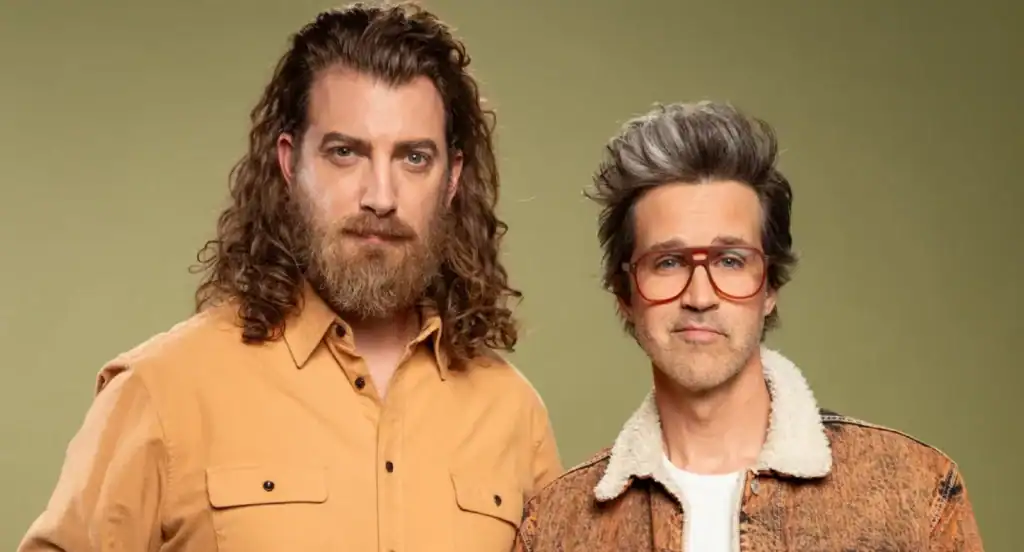
The session that set the tone for the week came from Rhett and Link, the creators behind Good Mythical Morning. Their message reframed what it means to work with a creator entirely.
The larger creators of today no longer operate like individuals with a phone and a ring light. They operate like media companies; producing shows, launching products, running podcasts, and building communities with genuine commercial infrastructure behind them. The implication for brands is significant: if you are still approaching creators as a distribution channel, you are behind.
The clearest takeaway was this, the most effective brand collaborations are those woven directly into the storytelling, not bolted on as a sponsored segment at the end of a video. We should all know by now that audiences can detect inauthenticity the second they see it, and will scroll past anything that feels transactional or misaligned. Brands were urged to treat content creators as genuine creative partners, with editorial input and collaborative ownership over how a story is told.
At Disrupt, this reflects how we have always approached creator partnerships. Genuine influence is earned, not manufactured. Every campaign we build starts with audience insight and creator alignment, finding the creators who genuinely belong in a brand's world, rather than simply those with the largest following. The creator economy maturing into this model is good news for brands willing to invest in the relationship, not just the vanity.
Why Long-Term Influencer Partnerships Outperform One-Off Campaigns
One of the most quoted stats from the week came from CreatorIQ: creators generate 11x more impressions and 14x more engagements than brand-owned content. The number is pretty staggering, but the context matters more than the headline. The reason the gap is so wide? Trust.
Audiences follow creators because they believe in their judgment. That trust does not exist in a single sponsored post, it is compounded interest and relationships built over time, through consistent, credible content that move the needle.
The influencer panel at the Brand Innovators BI Summit, featuring voices from Shopify, Dallas Wings, and Suntory, focused on the shift from transactional influencer relationships to genuine creative partnerships. The recurring theme was the difference between an awkward first date and a relationship built on shared values. The best campaigns do not look like campaigns. (This sentence alone should sum up how the creator economy works).
Urban Outfitters offered a practical example of this shift in action, moving toward equity-adjacent deals with micro-creators in engaged, specific niches. The idea that a smaller creator with a deeply loyal community delivers more commercial value than a larger one with a passive audience, we’ve long said that micro and niche creators are the most effective tool in an influencer marketing campaign’s arsenal, for this very reason.
The other key theme was the opportunity to extend influencer content beyond the creator's own channels. Taking high-performing creator content and placing it into paid media environments, where it reaches broader audiences but retains its native feel is, as Mediaweek noted, the next major brand opportunity. Disrupt has been building toward this model for some time. Creator content that performs organically is a signal. Amplifying it through paid social is how that signal becomes scale.
Ready to unlock creator marketing solutions that command attention and inspire action? Speak to Disrupt Today.
What Challenger Brands at SXSW 2026 Got Right About Creative Risk
The Brand Innovators BI Summit dedicated a full day to challenger thinking, and the case studies were instructive. Poppi, GoodRx, and BetterHelp all shared what they have in common: significant commercial growth achieved without the safety net of a legacy budget.
The session that drew the most conversation featured Jesse Johnson, VP of Marketing at Chili's, who laid out how one of America's most storied casual dining chains became, against all expectation, the hottest restaurant in the country. The strategy was not built on expensive hero campaigns. It started with a cheese pull on TikTok… yep, you read that correctly. Organic content from customers that Chili's noticed, leaned into, and built an entire cultural strategy around. Johnson and his team recognised that meme-native marketing was not a risk; it was the route to a younger audience that had written off the brand entirely.
The phrase that echoed across multiple sessions throughout the week was direct: "safe is forgettable." For challenger brands, and for any brand trying to cut through in saturated social feeds, creative risk-taking has moved from optional to commercially necessary.
Experiential Marketing Is No Longer Optional, Give creators something real
SXSW is one of the world's largest brand activation playgrounds, and 2026 demonstrated the gap between brands that use it well and those that don’t. The standout example was the ACC experiential footprint, turning the entire city of Austin into a canvas, with badge-specific neighbourhoods creating different experiences for different audiences. The lesson was clear: for brands like Virgin Voyages, Hasbro, and Barrys, experiential has become a foundational brand discipline, not a campaign add-on.
For influencer marketing, the relevance is direct. Experiential moments are the most potent source of creator content because they generate genuine reactions in genuine environments. When a creator attends something real, something designed for them to feel and not just photograph, the content that comes from it is incomparably more authentic than anything briefed in a deck.
The session coverage also highlighted an emerging frontier: spatial marketing. Brands are already producing spatial content assets, developing location-triggered notifications, and exploring AR wearable integrations. Snapchat's expected AR Specs launch this year marks the first commercially viable AR wearable for everyday consumers, and brands not yet considering how creator content translates into spatial formats risk being late to the next significant shift in how audiences experience brand stories.
At Disrupt, we design influencer-led experiences around live moments, from matchday access and behind-the-scenes sporting events to brand trips and hosted activations globally. The principle is consistent with what SXSW surfaced: culture-first content starts with giving creators something genuinely worth talking about.
Social Commerce and Short-Form Video: The Full-Funnel Reality
The commerce conversation at SXSW was less about emerging possibility and more about an already-arrived reality. Sessions from Pizza Hut, Yeti, and Sams Club all reinforced the same point: social platforms are now full-funnel commerce engines. Discovery, consideration, and conversion are happening within the same scroll.
Short-form video continues to dominate, and the creative standard being set by the leading brands is instructive. The model that is working is fifteen seconds of emotional hook before any product messaging appears. Audiences have become highly attuned to when they are being sold to, and the brands winning in social commerce are the ones that earn attention first and convert second.
The other significant development covered in sessions was the blurring of paid and organic search. AI search is making channel boundaries increasingly meaningless, with agencies reconsidering the distinction between SEO and PPC as a result. For content creators and the brands partnering with them, this has an important implication: content that performs organically on social is increasingly likely to surface in AI-assisted search, extending the reach of creator campaigns beyond their platform of origin.
Disrupt's paid social capability sits directly alongside our influencer work for this reason. We treat paid amplification of creator content as integral to the campaign, not an afterthought. In a world where the best social content doubles as search-discoverable brand collateral, the brands that join these dots will consistently outperform those that keep channels siloed.
AI Is Operational Infrastructure Now, Not a Creative Shortcut
The AI conversation at SXSW 2026 was, naturally, more mature than in previous years. The breathless speculation on what could be has been replaced a firm grasp of what is. It’s more practical and, for marketers, more useful.
Sessions from Adobe, HP, Microsoft, and Meta all pointed in the same direction: AI is now operational infrastructure, not an experimental tool. Brands are compressing creative production cycles from six weeks to six days using AI for CTV and streaming video. "AI-first" was positioned not as a philosophy but as a workflow standard.
Paul Woolmington of Canvas Worldwide framed it most clearly: human taste remains the most powerful competitive advantage in an algorithmic world. AI accelerates production; it does not replace the judgment, cultural instinct, and creative direction that determines what gets made and why. The risk is not that AI makes content too good. The risk is that brands use it to produce more of the same, but faster.
BuzzFeed founder Jonah Peretti made perhaps the sharpest observation of the week. His session argued that the internet has been optimised to death and that the relentless pursuit of performance has stripped it of creativity, spontaneity, and the human quality that made it worth spending time on in the first place. AI, he argued, should enable creative play, not accelerate the production of optimised content factories.
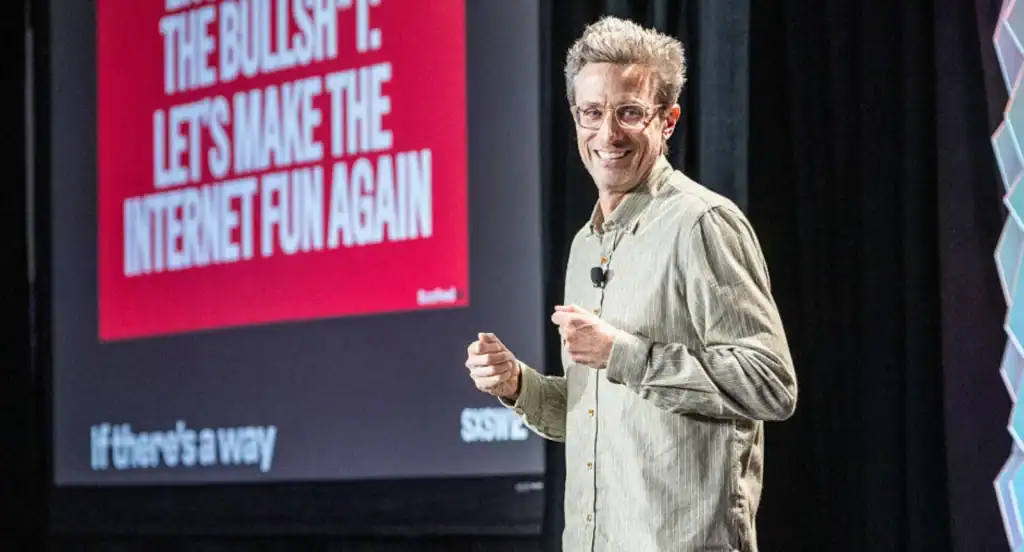
For influencer marketing, this is a meaningful provocation. The creator economy is now a trust economy, and marketers are placing a premium on it precisely because it offers something AI cannot manufacture - genuine human connection. The reason audiences trust creators over brand channels is precisely because creators are not optimised. They are opinionated, inconsistent, culturally attuned, and human. The best use of AI in this space is to reduce the operational friction around campaigns; briefing, reporting, rights management, performance analysis etc, so that the humans in the room can focus on the ideas that actually move people.
At Disrupt, that is the lens through which we use technology. Data and AI inform our audience insight, creator matching, and campaign measurement. The creative and cultural thinking remains entirely human. In 2026, that combination is not a differentiator. It is the baseline.
Key Takeaways for Brands and Marketers
Creators as media companies: Stop briefing creators like suppliers. Brief them like editorial partners. The brands getting the best results are the ones giving creators genuine creative ownership, not a script and a deadline.
Long-term partnerships beat transactional deals: A single sponsored post does not build trust. Equity-adjacent, relationship-first creator deals deliver more impressions, more engagement, and more commercial return than one-off activations. Extend the best-performing content into paid media and the returns compound further.
Bold strategy is commercially defensible: The Chili's story is the proof point. Meme-native, culture-first marketing is not a risk for challenger brands — it is the strategy. If your creative is safe enough that no one would raise an eyebrow, it probably will not move anyone either.
Experiential generates the most authentic creator content: If you want content that feels real, give creators a real experience worth documenting. Live moments, behind-the-scenes access, and brand-built environments are the most powerful briefing tools in influencer marketing.
Lead with emotion, sell second: In social commerce, the first fifteen seconds are not for your product. They are for earning the right to talk about it. Brands that hook on feeling before function are the ones converting at scale.
AI is a production tool, not a creative strategy: Use it to move faster and reduce friction. Do not use it as a substitute for human taste, cultural judgment, or the genuine creative thinking that makes influencer marketing work in the first place.
If you want to talk through what any of these themes means for your brand, or you’re ready to kickstart your next influencer marketing campaign, get in touch with the Disrupt team.
Disrupt is a global influencer marketing agency headquartered in London. We combine audience intelligence with the power of creators to deliver campaigns that connect, convert, and drive measurable commercial impact. From global awareness plays to performance-driven activations, we work across fashion, beauty, sport, FMCG, travel, gaming, luxury, and beyond, partnering with brands including Netflix, Vinted, Wizz Air, The FA, Huel, and Estrella Damm. We are part of the Tomorrow Group.
Genuine influence is earned, not manufactured. Get in touch.
 8 MIN READ
 2 MIN READ
 10 MIN READ